In 2025 the Principality's numbers stopped looking like a property market and started looking like a different asset class. Monaco's official price per square metre reached €57,569, and the Knight Frank Wealth Report 2026 confirmed what that means in practice: one million dollars now buys just 16 square metres of prime Monaco space — keeping the Principality, once again, the most expensive residential market on earth. The story of the year, though, is not the average. It is a single district crossing a line no district had crossed before.
That district is Larvotto. For the first time in recorded history a Monaco neighbourhood passed €70,000 per square metre — IMSEE puts it at €71,167, up 2.2 percent on the year. The engine is Mareterra, the six-hectare quarter reclaimed from the sea: as its first owners began to resell, Larvotto's resale value surged nearly fivefold to €851.9 million on just thirteen transactions, and those trades reset the district's benchmark. When a principality with no room to grow manufactures new land, the scarcity premium does not fall — it relocates, and it prices at a new ceiling.
Above even Larvotto sits the Carré d'Or, Monte-Carlo's golden square, where best-in-class product trades between €70,000 and €90,000 per square metre and exceptional branded residences reach beyond €100,000. Monte-Carlo led the Principality's district growth in 2025 at +4.8 percent, and its resale volume crossed €1 billion in a single year for the first time. The Carré d'Or trades almost entirely off-market; a handful of towers set the number, and the number is still climbing. This is where Monaco's ceiling lives.
Not everything in Monaco rose. La Condamine, the port district and the Principality's most liquid entry point, edged down 0.7 percent to €52,104 — a reminder that even here the tide is selective, favouring new-build trophy stock over older inventory. And the figure that underwrote the year was the average resale price: €7.6 million in 2025, up €1.6 million in twelve months, with the median now at €4.0 million — the level below which, increasingly, Monaco simply does not trade.
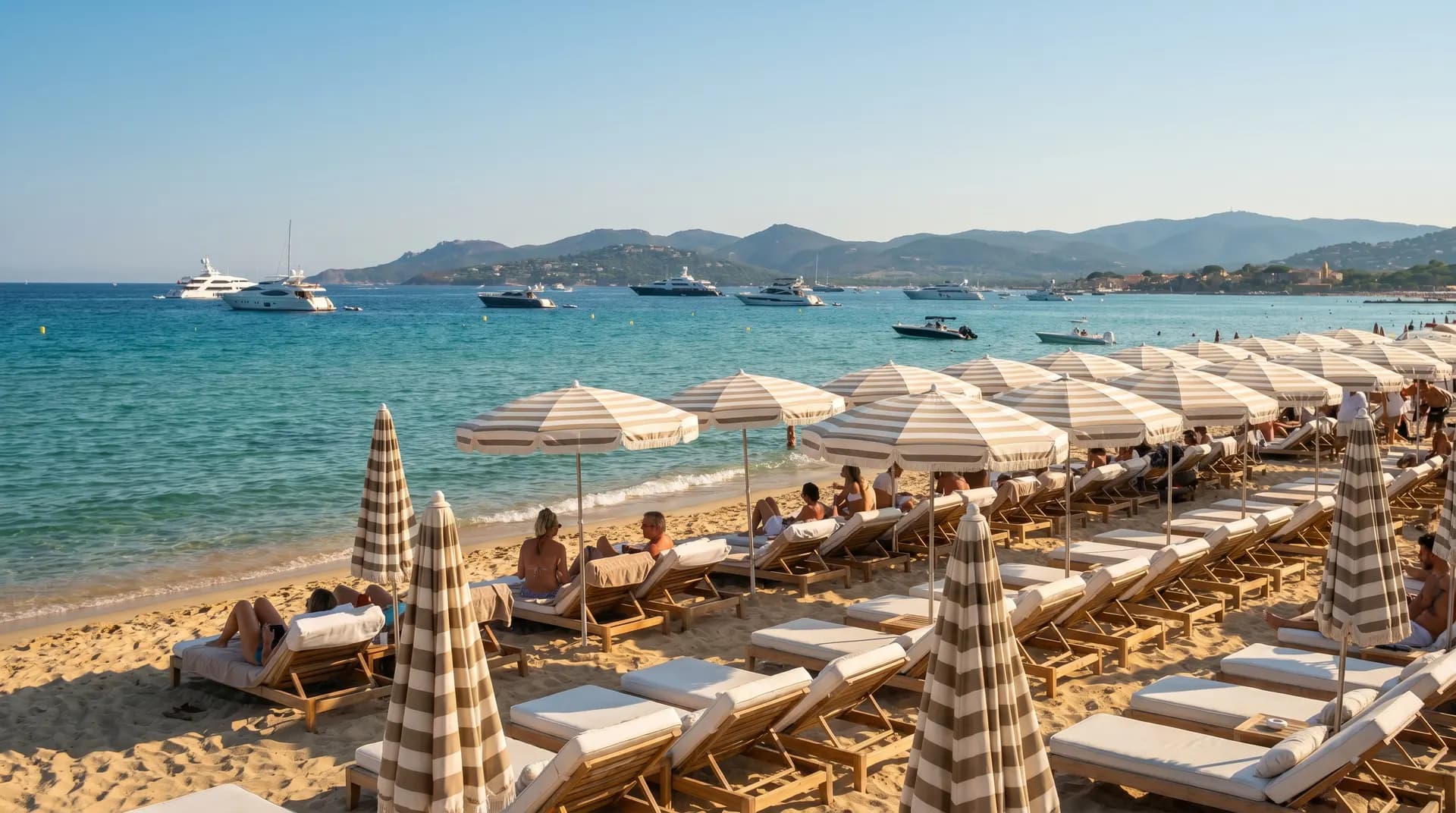
Cross the border west and the coast changes character entirely. Saint-Jean-Cap-Ferrat — routinely called the most expensive address after Monaco — sees prime waterfront villas trade around €42,000 per square metre, with trophy frontage running higher, while the Gulf of Saint-Tropez pushes past €45,000 for the rarest Pampelonne-facing estates. But these are the exceptions. Cap d'Antibes prime sits nearer €30,000, Cap-Martin €28,000, and the quieter satellites — Beaulieu, Villefranche, Èze — fall between €18,000 and €24,000. For the land, gardens and privacy the Principality structurally cannot offer, the French caps remain a fraction of its price per metre.
The clearest way to read the whole coast is the million-euro test. That budget buys roughly eleven square metres in the Carré d'Or and about one hundred and eleven in the inland village of Saint-Paul-de-Vence — a tenfold difference along a single shoreline. For buyers in 2026 the question is no longer 'Monaco or the Riviera' but which trade-off: jurisdiction, security and scarcity at the very top, or land and value a short drive west. On current momentum, Monaco's core and the ultra-prime caps carry the pricing power into the year ahead.
Methodology. Monaco figures are IMSEE's official 2025 price per square metre by district (Real Estate Observatory, published February 2026); the $1M-buys-16m² and world ranking are from the Knight Frank Wealth Report 2026. French Riviera figures are indicative prime benchmarks — best-in-class, sea-view or waterfront stock — compiled by MonacoTop from 2025–26 agency comparables (Sotheby's International Realty, Knight Frank, LuxuryEstate, MeilleursAgents). Year-on-year movement is 2025 versus 2024. This maps the market; it is not a valuation. For a specific address, the only number that matters is the one an appraisal returns.